




I've been preaching and teaching that we (the local church) are a family for years now. At our local church we recently made a change to reinforce that concept - we now include our K-5 children in corporate worship. We're one week in, but I'm already excited...
It seems odd to me that so many local churches shuttle their kids off to their own little corner virtually every time they meet. I understand that there's great value in having kids grouped with other kids sometimes: age-appropriate teaching, peer bonding, etc... But why the trend toward virtual isolation? I'm not sure it speaks well of our culture.
Having said that, one of the things I most like about our local church is that people actually want to include kids in the life of the local church! So we finally took the next major step last week, keeping the K-5s with their parents until the start of the sermon. For my part, it was great! Having all those kids viewing and participating in corporate worship, seeing what a mass of adult followers of Jesus looks like when singing their praise to Him, ... The benefits are probably incalculable, to be honest.
So, if you get a chance, let me know how you see this issue. What does your local church do? What would you change about the involvement of children in the life of your local church?
Hatushili
Saturday, February 28, 2009
We are a family

Wednesday, February 18, 2009
Missional training
As most of you know, I'm absolutely convinced that the church in America has messed up the very nature of Children's Ministry (CM) almost beyond repair. We have coddled them, we have entertained them, we have over-simplified everything for them. In the process we have also implicitly taught them that the local church exists for them.
One of the reasons I'm most honoured to be the Children's Pastor at our local church is the chance to change this, at least within our church family. We reached what I think I might look back on as a milestone the other day...
During our Wednesday night children's ministry, we began collecting items for our local nursing home. Children of all ages brought candies, cards, chapstick and other goodies to the church building. Then last week those same children decorated white gift bags and made Valentine cards for the residents of the nursing home.
So far, pretty standard fare for CM. What we did next has - I pray - laid the foundation for training our children to think missionally. We took the older kids from this group - a Sunday School class - to the nursing home to personally deliver our gift bags and Valentine cards. Twelve young souls - most of them in 4th and 5th grade - travelled the halls of the nursing home in groups of 6, guided to rooms of residents that could use some cheering up. The group I was with spoke with a lady recovering from the nasty cold that's been going around in these parts. She asked me to pray with her before I left the room. We were given the real honour of meeting and talking with a WWII vet, a man that was on the shores of Normandy 2 days after the invasion! We met a sweet lady that shard the same name as one of our children there that day. We spoke with a man barely able to speak.
What didn't we do? We didn't preach. We didn't insert the token gospel tract into their bags. We also didn't hide our love for Jesus. We didn't hide the fact that we were representing a local church. We wore our faith on our sleeves yet did not wield it as a weapon.
I couldn't be more proud of these, "my" kids. They shared the love of Jesus. They encouraged lonely hearts. They were - I think - challenged themselves by some of what they saw. They advanced God's glory.
On top of all that, they're learning first-hand that the life of the local church is not about being served. It's not about consumerism. It's not about what a local church can do for you. It's about service. As our Lord did, we came to serve those residents.
My great hope is that we've begun what will be a long-term relationship with this nursing home. I hope to get these children and others back to visit them regularly. We're already planning to tell the real story of St. Patrick with them sometime next month.
I know it seems small in so many ways, but I really think we're on to something here. Your thoughts?
Hatushili
Monday, February 9, 2009
Words written in red
One of the more curious tendencies of the emerging church is to take the words of Jesus as somehow more important than the rest of the Bible. Reverence for Jesus has to be demonstrated by elevating His words to a higher plateau, I suppose the thinking goes. I've seen this attitude in scholarly works on EC and at the local level. It's problematic, and I know I've posted about it before, but for the benefit of a friend let's address the issue again for just a bit, eh?
First things first - the Bible explicitly tells us that all Scripture is given by inspiration and all Scripture is profitable for growth in Christian character. You'd like to think that would settle it, but apparently it doesn't for plenty of EC folk.
Perhaps more to the point, Jesus Himself clearly sees enormous value in the Old Testament Scriptures. In fact, He uses the text of Jonah to validate His own ministry. In Matthew 12, His detractors ask for "a sign" and He promises to validate His ministry by none other than the "sign of Jonah". The language of the text makes it clear that Jesus fully accepts both the authenticity and authority of this OT text. If Jesus Himself had such a high view of Scripture, is it not the height of folly to declare that Jesus' words are more important than other Scriptures?!
Here's another issue: the words of Jesus fail to address so many issues that other texts of Scripture deal with. If we are to limit ourselves to only the words of Jesus, we severely limit God's voice on many, many topics.
Another: seeing the words of Jesus this way is a fundamental error in our view of Scripture. If Scripture is a sort of divine self-help book, then perhaps you could argue that the "way of Jesus" is most important in the Bible. But since the Bible is, in fact, God's self-revelation to humanity, such a view of Jesus' words falls very short of adequate.
None of this, of course, means that I'm devaluing the words of Jesus. I'm simply arguing that - while it sounds terribly pious - regarding Jesus' words as somehow more important than other words of the Bible is actually a lower view of Scripture and therefore the Christ of Scripture, too.
Hatushili
Saturday, January 31, 2009
What's your sign?
Church reader-boards are fascinating things, no? Virtually every church building has a reader-board somewhere ... out front, on the building ... somewhere! Any every church body wants to put that silly thing to some meaningful purpose, right? But let's be honest - how many of them really are meaningful? Not many; I know.
There are a few basic tactics that local churches seem to employ on these contraptions...
Theory A: Use the board for informational purposes. These are the reader-boards that simply list times of service or some upcoming event. Safe play, for sure. But is that really effective? I have my doubts. How many people are going to see that sign and think, "You know, I've always wanted to visit that church but didn't know when they met - now I think I'll go"? In this day and age? - zero.
Theory B: Use the board to be funny. Everyone wants others to think they're witty or funny, right? [I certainly do!] So use the board to say something clever, like "C H _ _ C H; what's missing? U R". Cute, but like most of the witty signs, they pretty much play to the home crowd. In other words, it's pretty much just other followers of Jesus that are going to "get it" and laugh. Not that there's anything bad about knowing you're brightening the day of some Christian that happens to be driving by ... but is that the best use of the reader-board? I don't know.
Theory C: Be attractional. These are the signs that attempt to invite people in with some tempting message. The most generic (and pathetic) would be the classic "Everyone Welcome". Those passing by are surely glad to know that - I'm sure they thought you needed a special invitation and a secret handshake to come visit this Sunday, right? One I particularly hate: "We have something for everyone". What's the implicit message here? That local churches exist for you. In other words, you should choose a church based upon what you get, what's in it for you, what goods and services they can provide. Sound consumerist? That's because it is consumerist, kids. To all reading this with the power of a reader-board: please stop using them to promote consumption of "Christian" stuff. Please.
Theory D: Be controversial. These signs will get you noticed in the marketplace, for good or for ill. A local church in our area had the audacity to put something on their reader-board just before the last presidential election claiming that Barack Obama was a Muslim. Absolute nonsense, but it made them infamous for about a week. Not a good plan, if you ask me. Another classic? "We still use the KJV!" - about a sure a way to keep all but the most hardened Pharisee from coming to your assembly... Or my personal favourites [and, incidentally, the reason I should never be given the power over a reader-board]: controversial signs that make you think! For example, what if your reader-board said something like, "Why the hell weren't you here Sunday?!" ... Reminiscent of Tony Campolo's famous rant/sermon, and definitely worthy of a double-take, it'd have the community talking!
Theory E: Tear it down! Why not? Why not get rid of that big, unsightly thing and plant a tree or some flowers? If you aren't putting it to good use (and admit it, you're most likely not) do the community a favour and take down an internally lit florescent eye-sore, eh?
I'm not saying any of these are necessarily wrong uses of a reader-board, nor that any are necessarily the best. Let's just stick to basic Biblical principles and attempt to be wise in how we use these things, or turn to Theory E.
What say you?
Hatushili
Wednesday, January 14, 2009
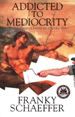
Book Review: Addicted to Mediocrity
When a man you respect tells you that three books have most impacted his life (aside from the Bible), then suggests you read one of them ... you read it!
My senior pastor asked me to read Franky Schaeffer's Addicted to Mediocrity. [Yes, that's Francis Schaeffer's son.] He apparently read it in the mid-80s and found it revolutionary. Knowing that I was going to be preaching on the subject of Christians and the arts, he recommended it to me. He even lent me his copy; how could I not read it?!
I think I understand why he found the book such a challenge to his thinking...
I remember what the late 1980s were like in the bubble of evangelical Christianity: anything not explicitly "Christian" was often deemed bad. "Christian" as an adjective ... !!! Another post, someday soon...
Anyway, in that climate any art that didn't portray overt, explicit imagery of Jesus was frowned upon. Sad. Silly. Ridiculous, to be honest.
In that climate, I can understand why this book we be revolutionary. In today's, I'm happy to report that it's not so outstanding. This is a good thing! Schaeffer would - I think - be happy with the progress we've made in this area. [Franky Schaeffer's personal journey is a whole different matter ... ]
If you grew up - like me - in an evangelical world that belittled anything not "Christian" than you should read this book. If that's never been a struggle of yours, pass on this one.
One specific quote I liked: "When our Christianity is allowed to become merely spiritual and inward without the incarnational and outward expressions of God's presence in the world, our faith is no longer meaningful in all areas of life. This indeed is what happened to Christianity during the twentieth century." (p.28)
I'll leave you with this - arguably the funniest endnote I've ever read: "In looking at the diversity of the Scripture in its content and form, one can hardly imagine that the Bible has anything to do with the present narrow theological sloganeering aspects of evangelical Christianity. It seems to me that if the Bible had been written along the lines of what much of evangelical Christianity represents today, instead of being the full comprehensive wonderful Book of diversity, beauty, knowledge, truth, wisdom, it would be a three-page pamphlet printed probably in words of one syllable, preferably on pink paper (because pink sells), possibly with a scratch and sniff section on the back to stimulate some spiritual experience while reading it. In contrast, the real Bible, the Word of God, is solid, human, verifiable, divine indeed." (p.20, endnote 1).
Hatushili
Monday, December 29, 2008
New Year's revolution
My senior pastor gave our assembly a wonderful challenge this past Sunday. He talked about the three basic ingredients of spiritual growth: Bible, prayer, fellowship. As you might expect, he talked about the challenge to read through the Bible in a year. We even passed out checklist cards so that the whole assembly can be on the same schedule - very cool. He talked about the discipline of prayer and the critical but often overlooked importance of real community.
But the challenge I most appreciated was this: read through a whole book of the Bible each day for a month. So here's what I plan to do. I'll read through the first half of Romans each day for the month of January, then the second half through February. Not sure where I'll go after that, but that's my start.
I believe this reading will have a revolutionary effect on my life. I'll let you know if that belief holds true...
Hatushili
Christmas
As is usually the case, this Christmas I had much more fun giving than receiving. But that's not to say I didn't enjoy the gifts I was given. One in particular has been a joy to me for the last few days. My mother-in-law (who lives with us) bought me Paul Simon's Graceland album (CD, actually). Why have I so enjoyed this gift? ...
First, I love this album. I bought it for my Dad a few years ago, who also really likes it. I've found a few of the songs online and posted them to my song list for this blog. I find myself singing bits and pieces of the album now and then. So when Mary found it for me ... ! To say I was excited is an understatement.
Second, I love Ladysmith Black Mambazo, the group that Simon features on this album. Their sound is terrific. Here's a YouTube page of their stuff - check it out if you're unfamiliar. Have you noticed the rather curious version of the ABC song playing on this blog? That's Ladysmith...
Third, the album has led me to a follower of Jesus. Seriously. As you might know, a number of the lyrics on this album are in Zulu. They're left untranslated, so I set about the task of trying to figure out what some of them meant. My Google search took me directly to a dude working as a missionary in Africa - check out this post from his blog. Strange how the LORD can use such a variety of means to get His children acquainted with one another, no?
Hopefully you have enjoyed the Christmas season as much as I. Graceland is just one of so many reasons...
Hatushili
Sunday, December 7, 2008
Good Bible maps site
Just a quick shout-out to a website I find myself using regularly for their very good maps. Hi-res, folks. Very hi-res. Print them without any fear of fuzziness!
Anyway, the site is here. Enjoy!
Hatushili
Saturday, November 22, 2008
The Voice, part 2
As I wrote about here, it seems that my emerging friends have a new Bible translation on the market. Aside from the fact that the very last thing I think we need is yet another Bible translation, I have a problem...
I strolled over to the website recently [note: it works better in IE, sorry!] and found a side-by-side comparison chart of the Voice with three other translations (the Message, the ESV and the TNIV). One of the passages they chose for comparison was Jesus' temptation in the wilderness. The NET (which, not incidentally, I really like) reads this way:
"Then Jesus was led by the Spirit into the wilderness to be tempted by the devil. After he fasted forty days and forty nights he was famished. The tempter came and said to him..." Matt 4:1-3a
Fair enough; a fine translation.
The Voice reads this way:
"The Spirit then led Jesus into the desert to be tempted by the devil. Jesus fasted for 40 days and 40 nights. After this fast, He was, as you can imagine, hungry. But He was also curiously stronger because of His fast. And so He was able to withstand the devil, the tempter, when he came to Jesus."
Houston, we have a problem. I'm okay with the concept of dynamic equivalency. I'm okay with a Bible inserting explanatory information within the body of the text, to a point. But did you notice the huge running commentary inserted into the Voice?! To their credit, it's italicized (the oft misunderstood standard for this kind of translational work). But that's little solace to a guy like me that feels the reader - not the editors of a particular translation - should bear the primary responsibility for interpretation.
Who's to say that Jesus' strength was "curious"? Why does the translation call for the quaint little insertion "as you can imagine"? How do we know that it was "because of his fast" that He was strong? What's the value of a comparative (strongerer) when it comes to Jesus?
These and more questions are raised by the Voice's translation. As a rule, any translation that raises more questions than it answers should be viewed with skepticism, no?
So while I've read precisely two passages from this new translation now, I'm very skeptical at this point.
What say you?
Hatushili
Wednesday, November 12, 2008
The Audacity of Hope
Wow! Talk about a mixed bag of reactions to a Presidential election! I've heard conservatives talk as if the end of the world is upon us. I've heard doom and gloom. I've heard people giddy that we finally elected a black man. I've heard liberals talk as if the weather itself is actually better now that a Democrat will be in office. I've heard virtually every kind of reaction possible. And, yes ... I even heard someone ask if perhaps Obama is the anti-Christ!
Let's set that stuff aside, folks. Let's focus on the audacity of hope. Real hope. Hope in Jesus.
President-elect Obama has struck a nerve in this country with his "Hope" mantra. Witness the t-shirts (even Oprah had one on!) that read simply "Hope won". Obama wants to give us hope precisely because people need hope. This is always true, but especially when times are tough.
So let's have the audacity to suggest to people that while political hope is fleeting, hope in Jesus is our bedrock.
Let's remind people that while Obama's policies may or may not work, Jesus is our certain Redeemer.
Let's let the audacious statements of Jesus permeate our lives:
Mark 10:45 "For even the Son of Man did not come to be served but to serve, and to give his life as a ransom for many."
Mark 9:35 "If anyone wants to be first, he must be last of all and servant of all."
Mark 12:30-31 "Love the Lord your God with all your heart, with all your soul, with all your mind, and with all your strength.' The second is: 'Love your neighbor as yourself.' There is no other commandment greater than these."
Matthew 25:45 "I tell you the truth, just as you did not do it for one of the least of these, you did not do it for me."
When Obama - like all political leaders - ultimately fails to provide real hope, let our light shine so brightly that others turn toward it.
Jesus is the hope of the world. How's that for an audacious statement?
Hatushili
Wednesday, November 5, 2008
Christian civility for President Obama
Like most of my readers, I did not vote for Mr. Obama. Unlike most of my readers, I voted for a third-party candidate. Nevertheless, please remember:
Barack Obama will soon be our president.
None of this silly "not my president" nonsense, please. Let us show the respect the office deserves. Let us look for areas where we agree with him and support him in those. Let us raise our voices in respectful protest when we do not agree. Let us pray for him, as we ought pray for all our leaders.
This is an opportunity for followers of Christ that disagree with Mr. Obama to be known for their love and grace. This is an opportunity for followers of Christ that agree with Mr. Obama to show respect and grace to those of us who don't. Let's not waste God's glory by becoming petty and mean-spirited. Campaigning is over; let's move forward. Perhaps more than ever, America needs the spirit of true grace that only the Holy Spirit - working through His followers - can bring.
Grace and Peace,
Hatushili


